


The main difference between a shore jigging rod and a boat jigging rod is how the jig is presented. Shore jigging involves casting a metal jig away from land and working it back at a horizontal or diagonal angle. Boat jigging usually involves dropping the jig below the boat and working it vertically through the water column.
That difference affects the entire tackle system. The rods use different lengths, blank actions, handles, reel configurations, jig ratings, and line capacities.
A rod carrying the word "jigging" is not automatically suitable for both techniques. You need to know whether it was designed for casting from shore or vertical jigging from a boat.
The Quick Answer
Choose a shore jigging rod when you need to cast metal jigs from a beach, breakwater, jetty, or rocky shoreline. These rods are generally longer and are most commonly paired with spinning reels.
Choose a boat jigging rod when you intend to lower the jig beneath the boat. These rods are generally shorter, easier to work vertically, and more manageable when fighting a fish close to the boat.
What Is Shore Jigging?
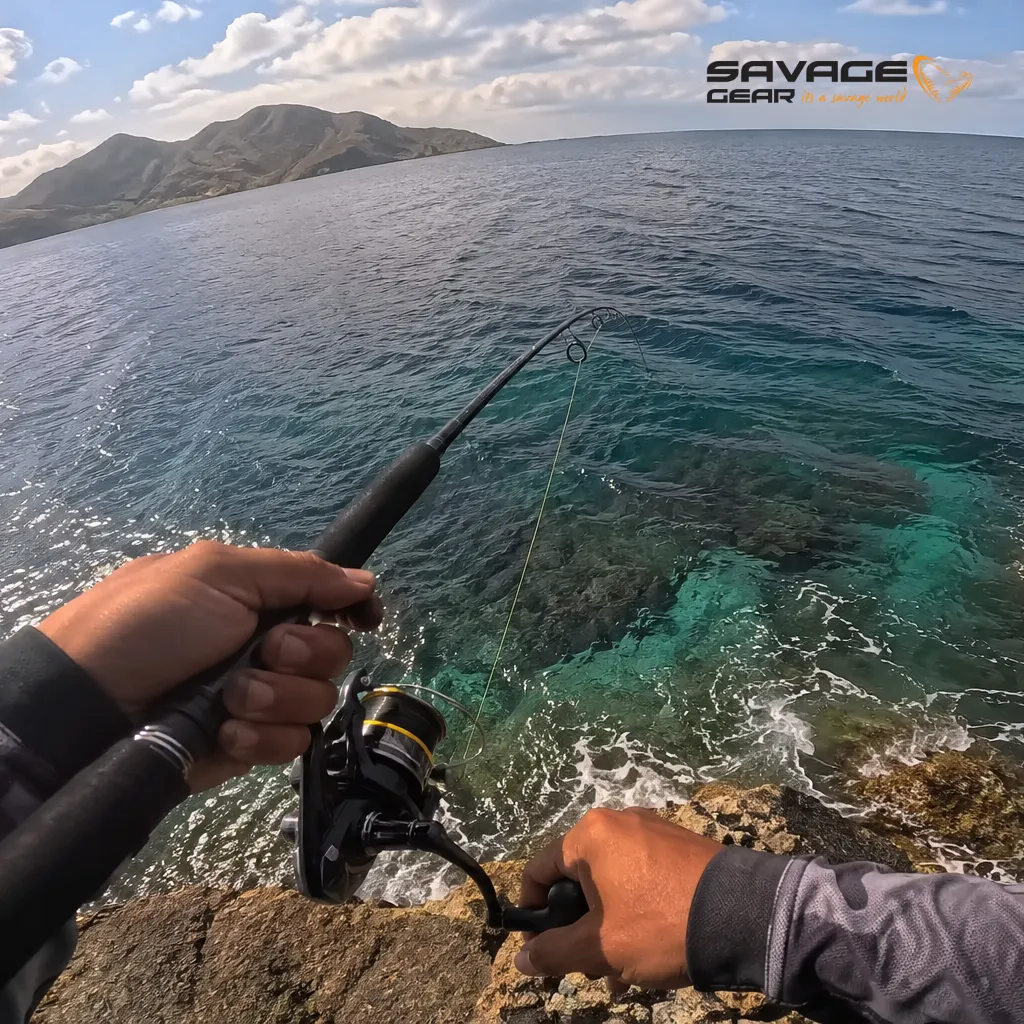
Shore jigging is a land-based technique in which the angler casts a metal jig, allows it to sink to a chosen depth, and retrieves it with lifts, pauses, speed changes, and controlled falls.
The jig travels horizontally or diagonally during much of the retrieve. The rod therefore needs enough length for casting distance and sufficient control to manage the line and fish close to rocks or shoreline structure.
Across the Gulf, shore jigging can be used for species such as kingfish, barracuda, queenfish, smaller tuna, and trevally, depending on the location, season, and lure size.
What Is Vertical Jigging from a Boat?
Boat jigging usually begins by lowering the jig to the bottom or to a depth where fish are showing. The angler then works it upward with fast, slow, or rhythmic rod and reel movements.
The broader category includes:
- Speed jigging.
- Slow-pitch jigging.
- Light jigging.
- Super-light jigging.
- Micro jigging.
Vertical jigging is not always heavy fishing. Jigs can range from small micro profiles for reef fish to heavy metal jigs used in deep water or strong current. Jig shape, depth, retrieve style, and target species all influence the correct tackle.
Shore Jigging Rod vs Boat Jigging Rod
| Feature | Shore Jigging Rod | Boat Jigging Rod |
|---|---|---|
| Presentation | Cast and retrieve from a distance | Drop and work the jig vertically |
| Rod length | Longer for casting and line control | Shorter for leverage and vertical control |
| Common reel type | Usually spinning | Spinning or overhead |
| Design priority | Casting distance and angled retrieves | Jig control and fighting fish below the boat |
| Jig rating | Must suit the rod's casting range | Matched to depth, current, technique, and rod rating |
| Line priority | Casting performance with abrasion protection | Capacity and low water resistance |
Why Are Shore Jigging Rods Longer?
A shore angler may need to reach fish holding beyond shallow water, rocks, or breaking waves. A longer rod helps load and launch the jig while also improving line control close to shore.
The added length can help with:
- Longer casts.
- Keeping braid clear of rocks and ledges.
- Steering fish close to the shoreline.
- Moving the jig farther with each rod lift.
Many dedicated shore jigging rods sit around the 9- to 10-foot range, although lighter, heavier, shorter, and longer models are available depending on the location, jig weight, and target species.
Is a Longer Rod Always Better?
No. Extra length can improve casting, but it can also increase fatigue and make the rod more difficult to work for long sessions.
Choose the length around the location:
- Open beach or breakwater: Extra casting distance can be valuable.
- Rocky ledges: Length can help keep the line away from structure.
- Confined areas: A slightly shorter rod may be easier to manage.
Why Are Boat Jigging Rods Shorter?
Boat anglers generally do not need to cast far. The jig is lowered directly into the fishing zone, so the rod is designed around vertical control, reduced fatigue, and leverage during the fight.
A shorter rod can provide:
- Efficient vertical jig movements.
- Less strain on the wrist and shoulder.
- Better control beside the boat.
- Reduced leverage against the angler during a heavy fight.
Many boat jigging rods are approximately 6 to 7 feet long, although the correct length varies with the jigging style, line rating, jig weight, and rod design.
Rod Action and Blank Design
Labels such as Fast, Heavy, or PE 3 do not tell the complete story. The rod must be designed to move the jig correctly for the chosen technique.
Shore Jigging Rod Action
A shore jigging rod needs a tip and midsection that load during the cast, combined with enough lower-blank power to control fish near rocks or the shoreline.
Speed Jigging Rod Action
A speed jigging rod must repeatedly lift and accelerate the jig without becoming unnecessarily stiff or exhausting to use.
Slow-Pitch Jigging Rod Action
A slow-pitch rod uses the blank's rebound to lift and redirect the jig. It may appear slim and flexible, but that does not mean it is intended to be weak or overloaded.
Selection rule: Choose the rod according to the jigging style first. Then confirm that its jig and line ratings suit the target species and conditions.
Understanding Jig Weight Ratings
Shore Jigging Rods
The printed jig or casting range generally indicates the weights the rod is designed to cast and control. A lure that is too light may not load the blank correctly, while a lure above the recommended range can overload the rod during a powerful cast.
Casting weight is one of the most important specifications when choosing a shore rod. Underloading reduces the rod's ability to launch the jig efficiently, while exceeding the upper limit can place unnecessary stress on the blank.
Boat Jigging Rods
A vertical jig rating indicates the weight range the rod is designed to work. The best jig weight still depends on depth, current, line angle, and jig shape.
A long, narrow jig can cut through current differently from a wide, slow-falling jig. Stronger current may require additional weight even at the same depth.
Important: A rod rated to work a heavy jig vertically is not automatically rated to cast that same weight with maximum force.
Reel Differences
Shore Jigging Reels
Spinning reels dominate shore jigging because they handle repeated casting efficiently.
Look for:
- A spool capacity that suits the target species.
- A useful retrieve rate for working jigs and collecting slack.
- A smooth, controllable drag.
- A reel weight that balances the rod.
- Construction suitable for saltwater use.
Medium and heavy shore jigging commonly use medium-to-large spinning reels, but actual sizing varies between manufacturers and between light and heavy shore jigging applications.
Boat Jigging Reels
Boat jigging can use either:
- Spinning reels: Popular for speed jigging, many light-jigging setups, and some slow-pitch applications.
- Overhead reels: Common in vertical and slow-pitch jigging because they provide direct spool control during the drop.
Prioritize:
- Line capacity for the fishing depth.
- Gear durability and usable torque.
- Line retrieved per handle turn.
- Consistent drag performance.
- A comfortable handle for repeated jigging.
Is a High Gear Ratio Always Better?
A high ratio can recover line quickly, but it may require more effort under load. A lower ratio can offer useful cranking power but may not suit every high-speed presentation.
Compare the reel's line retrieval per crank, not only the printed gear ratio.
Braid and Leader Differences
Braided line is used for both techniques because of its low diameter, sensitivity, and limited stretch. The priorities, however, are different.
Shore Jigging Line
The angler needs a balance of:
- Strength.
- Castability.
- Abrasion protection.
- Useful spool capacity.
A fluorocarbon or heavy monofilament leader is commonly added to protect the connection near rocks, teeth, and the fish's body.
Boat Jigging Line
Line diameter becomes especially important because current acts on the entire length of braid in the water. Thicker braid creates more resistance, increases the line angle, and may require a heavier jig to remain close to vertical.
Using a practical braid diameter that still suits the target fish and structure reduces water resistance and helps the jig remain more vertical.
Can You Use the Same Braid for Both Techniques?
Sometimes, particularly when the outfits are similar, but a line that works well from shore is not automatically ideal for deep vertical jigging.
- Thicker braid can provide confidence around rocks but creates more resistance in deep water.
- Thinner braid helps the jig remain vertical but may provide less margin around sharp reef structure.
Can You Use a Shore Jigging Rod on a Boat?
Sometimes, but it is rarely the best tool for continuous vertical jigging.
It may work when:
- Casting jigs away from the boat.
- Using lighter jigs in shallow water.
- Targeting surface-feeding fish rather than fishing vertically.
Its extra length may become tiring, awkward inside a small boat, and harder to control when a fish reaches the side.
Can You Use a Boat Jigging Rod from Shore?
A short cast may be possible with some models, but a boat rod will not perform like a dedicated shore jigging rod.
Common limitations include:
- Short casting distance.
- Poor line clearance around rocks.
- Reduced line control in waves.
- Risk of loading the rod in a way it was not designed to handle.
How to Choose a Shore Jigging Rod
Choosing a shore jigging rod begins with the jig weights you actually cast and the type of shoreline you fish. A rod for medium jigs from a breakwater may not be the same rod an angler needs for heavy metal jigs from exposed rocks.
1. Start with Your Most-Used Jig Weights
Choose a casting range that covers most of the jigs in your tackle box, rather than the heaviest jig you might use occasionally. A rod performs more naturally when your regular jig weights sit comfortably within its working range.
A Versatile Shore Jigging Option
The Savage Gear Defiance SG2 Shore Jigging Rod is 3.05 metres long and is available in two casting ranges:
- 30-100 g: For anglers who regularly cast medium-weight jigs and want a more manageable setup for repeated casting.
- 60-150 g: For heavier jigs and anglers who need additional power in open or rocky locations.
The two ratings allow you to select the rod around your real lure weights instead of automatically buying the heaviest model. Its 3.05-metre length also supports the main requirements of shore jigging: casting distance and line control around shore structure.
Compare the 30-100 g and 60-150 g Savage Gear Defiance SG2 models
2. Consider the Fishing Location
- Open beach or breakwater: Prioritize useful casting distance and balance during repeated casts.
- Rocky shoreline: Look for enough length and control to keep the braid clear of ledges.
- Confined areas: Avoid unnecessary length and power if they make the outfit difficult to manage.
3. When Do You Need a Heavier Shore Jigging Rod?
A higher casting range becomes useful when heavy jigs form a regular part of your fishing, when open locations require powerful casts, or when stronger target species demand a suitably matched rod, reel, and line system.
For Heavy Jigs and Powerful Shore Jigging
The Savage Gear SGS6 Shore Jigging Rod is 3.05 metres long and carries a 70-180 g casting rating.
It is better suited to anglers who already know they will cast heavy metal jigs from beaches, rocks, or breakwaters. It avoids the common mistake of loading a lighter rod with weights above its intended range.
Consider this rod when:
- Your regular jigs fall between 70 and 180 grams.
- You need a heavy shore jigging setup for rocks or breakwaters.
- You are targeting species such as kingfish, cobia, GT, or tuna with a balanced heavy outfit.
4. Do Not Automatically Choose the Strongest Rod
The heavier rod is not always the better purchase. If most of your jigs weigh 40-80 grams, the 30-100 g Defiance SG2 may be more comfortable and responsive than a 70-180 g model. If your regular jigs start around 80 or 100 grams, a higher casting range may make more sense.
Practical buying rule: Keep your most-used jig weights comfortably inside the rod's range rather than placing all of them at its minimum or maximum limit.
5. Balance the Rod, Reel, and Braid
A 3.05-metre shore jigging rod needs a spinning reel and braid that balance line capacity, strength, retrieve rate, and casting performance. An unnecessarily heavy reel increases fatigue, while a reel that is too small may not provide the required capacity or drag performance.
How to Choose a Boat Jigging Rod
Boat jigging rods are not all designed for the same presentation. The correct choice depends on whether you fish with fast vertical jigging, slow-pitch jigging, or a lighter jigging system.
1. Choose the Jigging Style First
- Vertical and speed jigging: Requires a shorter rod that works the jig repeatedly and remains controllable during the fight.
- Slow-pitch jigging: Requires a blank designed to load and rebound so the jig can lift, turn, and fall correctly.
- Light jigging: Uses a lighter rod, smaller jigs, and line matched to the depth and current.
This is why jig weight alone should not determine the purchase. A speed jigging rod and a slow-pitch rod can display similar numbers while using very different blank designs.
2. Options for Vertical Boat Jigging
PENN Carnage III for Heavy Boat Jigging
The PENN Carnage III Jig Spinning Rod is 1.93 metres long and rated for 150-300 g jigs.
Its shorter boat-focused length supports vertical control, while the jig range is aimed at anglers using medium-to-heavy metal jigs in deeper water or stronger current.
It may suit you when:
- You prefer a spinning reel for boat jigging.
- Your regular jigs fall within the 150-300 g range.
- You need a one-piece rod for heavy vertical jigging.
- Your reel, braid, leader, and drag system are matched to strong fish and deeper water.
Ugly Stik Tiger Elite for Jigging and Bottom Fishing
The Ugly Stik Tiger Elite Jig Spinning Rod provides another boat-jigging option at 1.83 metres, with a 170-280 g jig rating.
Its short length and spinning configuration are intended for vertical work below the boat with medium-to-heavy jigs. It can also support selected bottom-fishing applications when the rig and remaining tackle are correctly matched.
Consider it when you need:
- A short spinning rod for vertical boat jigging.
- A 170-280 g jig range.
- A one-piece rod for demanding boat use.
- A setup that can cover vertical jigging and suitable heavy bottom-fishing applications.
Explore the Ugly Stik Tiger Elite for vertical jigging and bottom fishing
3. A Dedicated Slow-Pitch Option
PENN Battalion II Slow Pitch Spinning
When slow-pitch jigging is your main technique, selecting any short boat rod is not enough. The PENN Battalion II Slow Pitch Spinning Rod is designed specifically for slow-pitch work, with a length of 2.03 metres and a jig rating up to 250 grams.
The key difference is not only the printed rating. Its blank is designed to load and recover in a way that helps create the lift-and-fall movement required by slow-pitch jigs.
Choose it when:
- You want a spinning rod designed for slow-pitch jigging.
- You use jigs up to 250 grams in suitable conditions.
- Jig fall and blank rebound matter more than a fast retrieve.
- You want a lighter and more technique-specific alternative to a traditional heavy jigging rod.
See how the PENN Battalion II is configured for slow-pitch spinning
4. Consider Depth and Current
Deeper water and stronger current often require heavier or faster-sinking jigs. The selected weight must remain within the rod's rating, while practical braid diameter helps reduce water resistance.
5. Compare Line, Jig, and Reel Ratings
Before buying, compare:
- Your regular jig weights.
- The rod's recommended line class.
- Whether it is a spinning or overhead model.
- Whether it is designed for speed or slow-pitch jigging.
- Its length and comfort inside your boat.
Do not choose between the PENN Carnage, Ugly Stik Tiger, and PENN Battalion by brand or strength alone: begin with the technique. Consider the Carnage or Tiger Elite for vertical jigging within their stated ranges, and the Battalion when slow-pitch jigging is the main objective.
Which Setup Is Right for You?
| Your Fishing Style | Recommended Rod | Common Reel | Main Priority |
|---|---|---|---|
| Casting jigs from a beach | Longer shore jigging rod | Spinning | Casting distance and balance |
| Rock-shore jigging | Shore jigging rod with suitable power | Spinning | Keeping line clear of structure |
| Boat speed jigging | Short speed jigging rod | Spinning or overhead | Retrieve speed and durability |
| Slow-pitch jigging | Dedicated slow-pitch rod | Overhead or dedicated slow-pitch spinning | Blank response and fall control |
| Light or micro jigging | Light rod matched to small jigs | Light spinning or overhead | Sensitivity and low outfit weight |
Quick Comparison of the Recommended Jigging Rods
| Rod | Fishing Style | Length | Casting or Jig Rating | Best For |
|---|---|---|---|---|
| Savage Gear Defiance SG2 | Shore jigging | 3.05 m | 30-100 g or 60-150 g | Anglers who want to match the rod closely to their regular jig weights |
| Savage Gear SGS6 | Heavy shore jigging | 3.05 m | 70-180 g | Anglers regularly casting heavy jigs from beaches, rocks, or breakwaters |
| PENN Carnage III | Vertical spinning jigging | 1.93 m | 150-300 g | Heavy boat jigging with jigs inside this weight range |
| Ugly Stik Tiger Elite | Vertical jigging and suitable bottom-fishing applications | 1.83 m | 170-280 g | Anglers seeking a short boat rod for medium-to-heavy jigs |
| PENN Battalion II | Slow-pitch spinning | 2.03 m | Up to 250 g | Anglers who want a spinning rod designed specifically for slow-pitch jigging |
Still deciding? Start with the technique and your most-used jig weight:
- For medium shore jigging, review the Savage Gear Defiance SG2 30-100 g model.
- For heavier shore jigging, compare the Defiance SG2 60-150 g with the SGS6 70-180 g.
- For heavy vertical boat jigging, compare the PENN Carnage III and Ugly Stik Tiger Elite by jig rating and rod length.
- For slow-pitch jigging with a spinning reel, start with the PENN Battalion II Slow Pitch.
Opening each product page and checking its jig rating, line class, length, and reel configuration will help you eliminate unsuitable options before buying.
Common Buying Mistakes
- Choosing a rod only by the expected fish size.
- Confusing a vertical jig rating with a safe casting rating.
- Buying an unnecessarily large and heavy reel.
- Using braid that is too thick for deep water and strong current.
- Pairing an overhead reel with a rod designed for spinning, or vice versa.
Conclusion
A shore jigging rod is the right choice when casting distance and line control from land are the priorities. Match its length and casting range to your location and most-used jig weights, then add a balanced spinning reel and suitable braid.
A boat jigging rod is the right choice when the jig is worked below the boat. Choose the specific jigging style first, then match the rod to jig weight, depth, current, PE rating, and reel type.
No single rod is ideal for both techniques. Some crossover is possible, but purpose-built tackle will be more comfortable, efficient, and easier to use correctly.
Frequently Asked Questions
Can I use a shore jigging rod for boat jigging?
It can work for light jigging or casting from a boat, but its extra length may become tiring during continuous vertical jigging. A shorter boat rod generally offers better control beside the boat.
Can I cast a jig with a vertical jigging rod?
Some boat rods can make short casts, but the maximum vertical jig rating should not automatically be treated as a safe casting weight.
What is the best length for a shore jigging rod?
There is no single best length, but many shore jigging rods are approximately 9 to 10 feet long. Choose according to casting distance, shoreline structure, jig weight, and comfort.
Is a spinning or overhead reel better for boat jigging?
Spinning reels are popular for speed jigging, light jigging, and some slow-pitch applications. Overhead reels provide direct spool control during the drop. The best choice depends on the technique and rod design.