If you are looking for a new fishing rod, do not start with the brand name or price tag. Choosing the right rod begins with four basic questions: where you will fish, how you will fish, what weight you will cast or work, and which reel and line you will use with it.
Many beginners buy the rod first and then try to build the rest of the setup around it. A better approach is to do the opposite: define how you will fish first, then choose a rod with specifications that match that job.
In this guide, we will explain how to choose a fishing rod for beginners, how to understand rod length, power, casting weight, action and blank material, and how to match the rod with the right reel and fishing line before you buy.
Before Buying a Fishing Rod, Answer These Four Questions
- Where will you fish? Open beach, pier, corniche, rocky shore or boat?
- How will you fish? Bait and sinker fishing, lure casting, shore jigging, boat jigging or another technique?
- What weight will you cast or work? Your sinker, bait, lure or jig should fall within a suitable range for the rod.
- What reel and line will you use? The rod, reel and line should work together as one balanced tackle system.
A practical rule for beginners: do not start by looking for the strongest or most expensive fishing rod. Start by finding the rod that fits the technique you will actually use.
What Is the Best Fishing Rod for Beginners?
There is no single best fishing rod for beginners that works for every angler and every location. A beginner fishing bait from an open beach may need very different specifications from someone casting lures from a pier or fishing from a boat.
If you are starting from zero, look for a rod that:
- Matches the location and technique you plan to use most often.
- Covers the casting or working weight you actually use.
- Feels manageable and comfortable to control.
- Matches the type of reel you plan to use.
- Does not add unnecessary power or weight simply because stronger specifications sound better.
If you are looking for the best fishing rod for a beginner, the better question is not Which model is best? but Which specifications fit the way I fish?
Quick Fishing Rod Guide by Location and Technique
The ranges below are general starting points only, not fixed rules. Rod design, manufacturer specifications, fishing technique and the actual weight being used can all change the correct choice.
| Fishing location and technique | Length range to start comparing | Casting weight to start comparing | Main priorities |
|---|---|---|---|
| Beach bait fishing with sinkers | Often around 3.6-4.5 meters | Often around 80-200 grams depending on the complete rig | Casting distance, sinker and bait weight, comfortable handling |
| Pier, corniche or general shore fishing | Often around 2.1-3 meters | Varies according to the bait, lure and technique | Available space, maneuverability and casting weight |
| General boat fishing | Often around 1.8-2.4 meters | Varies widely by technique | Control, depth and how the rod is used beside the boat |
How to Choose a Fishing Rod for Shore Fishing
When comparing the best fishing rods for shore fishing, do not choose by length alone. A longer rod can help with casting distance in some situations, but it must still match the weight of your sinker, bait, lure or jig and the type of shoreline you are fishing.
Bait fishing from an open sandy beach is not the same as shore jigging from rocks, even though both are forms of shore fishing.
If you practice shore jigging, first read our guide to shore jigging rods vs boat jigging rods, because the rod design changes according to how the lure is worked and how the load is applied.
Once you know your intended use, you can compare shore and boat fishing rods based on the specifications you need rather than choosing by price or length alone.
How to Read Fishing Rod Specifications
Two rods can have exactly the same length while one is designed for light lures and the other for much heavier weights. They may also differ in power and action, so fishing rod specifications should always be read together rather than one number at a time.
Rod Length
Rod length affects casting, control and how the tackle feels in use.
Longer rods can help generate longer casts and keep the line higher above some obstacles, while shorter rods are generally easier to maneuver, especially on boats or in restricted spaces.
There is no rule saying that a longer rod is always better. Choose a length that suits your technique and that you can handle comfortably.
Rod Power
You will commonly see power ratings such as Light, Medium, Medium Heavy and Heavy.
Power does not describe the physical weight of the rod, and it does not simply tell you the size of fish the rod can catch. It broadly describes how much load is required to bend and load the rod blank.
This is why Heavy is not automatically better than Medium. The correct power depends on the technique, working weights, hook size and fishing conditions.
Casting Weight
Casting Weight is one of the most important specifications to check before buying a fishing rod.
If the manufacturer prints a casting range in grams on the rod, that range indicates the weights the rod was designed to work with.
Consider the total weight you are actually casting. In bait fishing, do not look at the sinker alone; also account for the bait and the rest of the rig. In lure fishing or jigging, the lure or jig weight becomes one of the key factors.
Avoid making constant use at the absolute maximum rating your normal habit, and do not exceed the manufacturer's stated range in an attempt to gain extra casting distance.
Rod Action
Rod action broadly describes where and how the rod blank bends under load.
With a Fast action rod, most of the initial bend is concentrated toward the upper part of the blank, while slower actions allow the bend to extend farther down the rod.
Action and Power are not the same thing. Two rods can have the same power rating but different actions, giving them a different feel and behavior in use.
Rod Sections and Rod Weight
The number of sections matters particularly for anglers who travel often or need a rod that fits easily inside a vehicle or travel bag.
More sections do not automatically make a rod weak. Blank design, joint quality and correct use matter more than section count alone.
If portability is important to you, read our guide to multi-piece and travel fishing rods before making your decision.
Rod weight also becomes especially important in techniques that involve repeated casting or constant lure movement for several hours, because even a small difference in weight can become noticeable over a long session.
Spinning Rod or Casting Rod?
The rod must match the type of reel you plan to use.
A spinning rod is designed for a spinning reel, while a casting rod is designed for an appropriate casting or baitcasting reel.
The guide layout, reel seat and way the rod is held differ between the two systems, so do not choose the rod and reel as completely separate items without checking compatibility.
For many beginners, a spinning setup is easier to learn and use for general fishing, but that does not make it the correct choice for every technique.
Once you know the rod type, you can compare fishing reels that fit the setup instead of choosing a reel first and trying to find a rod around it.
If you want to understand reel size, gear ratio, drag and line capacity in more detail, read our dedicated guide to fishing reel specifications instead of trying to cover the entire reel topic here.
Carbon Fiber, Fiberglass or Composite Fishing Rod?
Blank material affects rod weight, sensitivity, bend characteristics and durability, but the material name alone does not determine whether a rod is suitable for you.
Carbon Fiber Fishing Rods
Carbon fiber can be used to create light and sensitive rod blanks with different levels of stiffness and responsiveness depending on the fibers and construction method.
This makes carbon rods popular in techniques where rod weight, sensitivity and response matter.
However, the word Carbon does not automatically make one rod better than another. Side impacts, poor transport or incorrect loading can still damage a carbon rod.
Fiberglass Fishing Rods
Fiberglass is commonly used in rods that benefit from flexibility, progressive bending characteristics and practical toughness.
Some fiberglass rods may also be heavier than carbon rods designed for a similar application.
For that reason, fiberglass should not automatically be described as the best choice for every beginner or every child. Rod weight, length, technique and the angler's ability to control the setup all matter.
Composite Fishing Rods
Composite rods combine more than one material or fiber system to achieve specific characteristics in the blank.
However, the word Composite does not guarantee that a rod is automatically better or stronger than every carbon or fiberglass alternative.
The better rule is to choose the specifications that fit your fishing first, then consider the blank material as one part of the overall decision.
How Should a Beginner Match the Rod, Reel and Fishing Line?
If you are buying your first fishing setup, think of the rod, reel and line as one system rather than three separate purchases.
Beginner's Pre-Purchase Checklist
- Is the rod designed for the fishing technique I plan to use?
- Does the Casting Weight cover the bait, sinker, lure or jig I normally use?
- Is the rod designed for spinning or casting?
- Does the reel type match the rod?
- Does the reel feel balanced when mounted on the rod?
- Does the reel have enough line capacity for the technique?
- Are the line strength and thickness suitable for the tackle system?
- Can I comfortably hold and cast the complete setup for an extended fishing session?
Once you have chosen the rod and reel, you can compare fishing lines by type, strength and required capacity instead of buying the line first and building the rest of the setup around it.
Are Rod and Reel Combos Good for Beginners?
A rod and reel combo can be a practical option for a beginner who does not want to build a first setup piece by piece.
However, the fact that the rod and reel are sold together does not automatically mean that the combo suits your fishing. Check the rod length, reel size, casting weight and intended technique first.
You can compare the available rod and reel combos and choose a setup whose specifications fit your intended use.
How to Choose a Fishing Rod for a Child
There is no single fishing rod length or setup that suits every child. Age provides only a general reference; the child's ability to hold and control the rod is more important than age alone.
Focus on four factors:
- Length: The child should be able to lift, direct and cast the rod without struggling to control it.
- Weight: Consider the combined weight of the rod and reel, not the rod alone.
- Handle size: The child should be able to grip the rod securely and operate the reel comfortably.
- Ease of use: Choose a simple setup that matches the child's current experience.
Fiberglass is not automatically the best option for every child, and carbon fiber is not automatically unsuitable. The better choice is the rod the child can control safely and comfortably.
Safety is more important than casting distance. Teach children to check the area behind them before casting, keep a safe distance from other anglers, and avoid removing hooks or handling potentially dangerous fish without adult supervision.
Common Mistakes When Buying a Fishing Rod
- Choosing by length alone: Length does not tell you the rod's power, action or casting range.
- Buying the strongest rod available: Extra power is not an advantage if your technique does not require it.
- Ignoring Casting Weight: This is one of the key specifications that should match the actual weight you use.
- Buying the reel before identifying the rod type: This can lead to an incompatible or poorly balanced setup.
- Choosing the rod, reel and line separately: All three should work as one tackle system.
- Assuming carbon fiber is always better: Each material has its own characteristics and limitations.
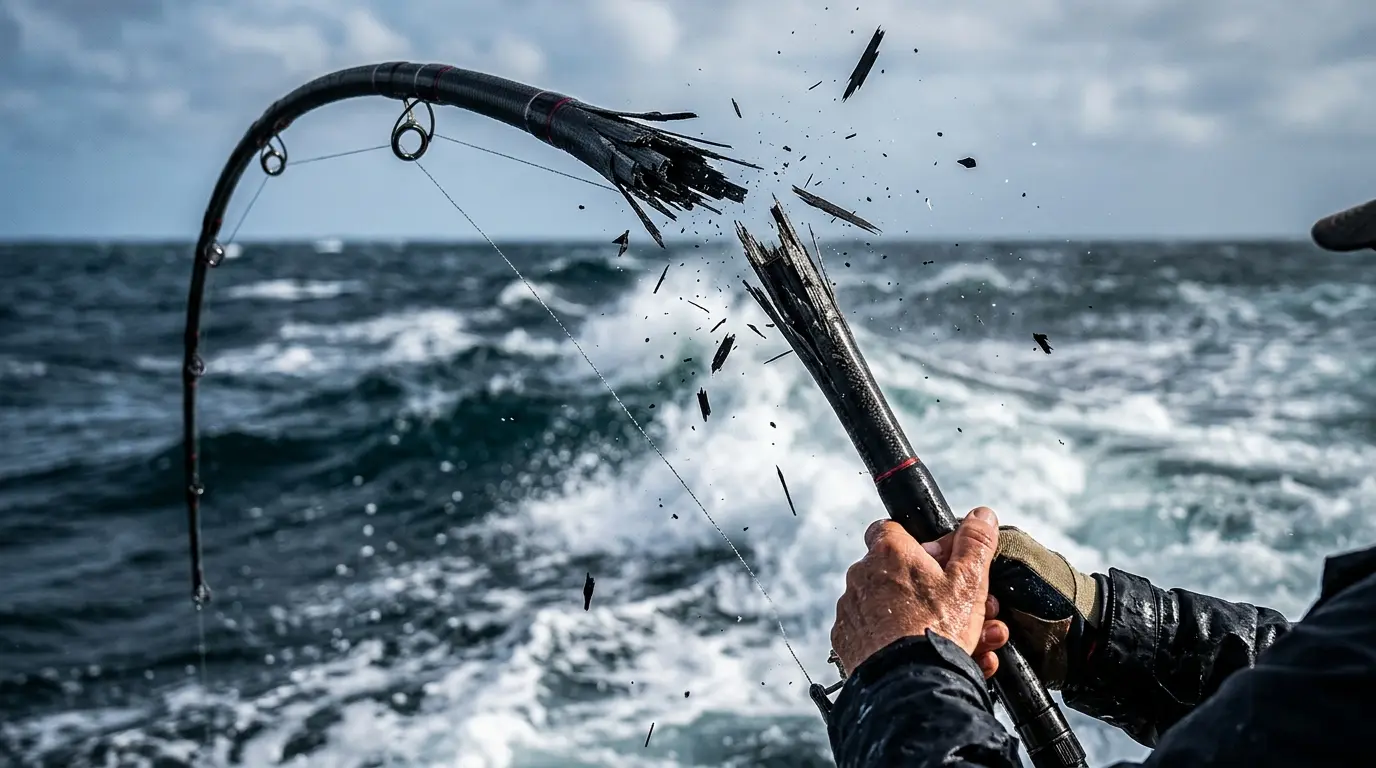
- Assuming a strong rod cannot break: No fishing rod is unbreakable, and misuse can damage any rod.
If you want to understand the mistakes that can damage a rod after purchase, read our guide to why fishing rods break and how to avoid it.
Which Fishing Rod Specifications Should You Start With?
- If you fish bait and sinkers from an open beach: Start with a rod that supports the casting distance you need, then match the Casting Weight to the complete sinker and bait setup.
- If you fish from a pier or corniche: Start with a manageable length for the available space, then choose power and casting weight according to the bait or lure.
- If you fish from a boat: Give more importance to control, technique and working weight than to overall rod length.
- If you practice shore jigging: Choose a rod designed specifically for shore jigging rather than buying any rod simply labeled Jigging.
- If you are a beginner: Look for a balanced, manageable setup rather than paying for specifications you do not need.
- If the rod is for a child: Prioritize low overall weight, ease of control and safety.
The practical rule is simple: choosing the right fishing rod starts with the fishing technique, not the product name. Define the location and working weight first, then read the rod's Length, Power, Casting Weight and Action, and only after that choose the reel and line that complete the setup.
What is the best fishing rod for beginners?
There is no single best rod for every beginner. Choose a fishing rod that matches your fishing location, technique and casting weight, feels comfortable to control, and works with the reel and line you plan to use.
How do I choose the right fishing rod?
Start with where and how you fish and the weight you plan to cast. Then compare rod length, power, Casting Weight and Action before matching the rod with a compatible reel and fishing line.
What rod length is best for shore fishing?
There is no single rod length for every type of shore fishing. Bait fishing from an open beach may require a longer rod than some forms of lure casting or shore jigging, so choose the length according to the technique, casting weight and fishing location.
Should a beginner buy a rod and reel separately or choose a combo?
A rod and reel combo can be a practical option for beginners when its specifications match the intended fishing technique. Buying the components separately gives you more flexibility but requires more attention to rod, reel and line compatibility.